An educator affects eternity. A teacher can never tell where his influence stops.
It is not possible for me to tell the story of my governess, Tamara, without including my family in the tale.
 When Tamara Nikolaievna first entered my life, I had just turned three years old. After my mother discovered I had taught myself to read at the age of two and a half, like a proud mother, she decided I was a genius. My mother was an intellectual who spoke many languages and education was always taken for granted in our home. Thus, my mother decided the time had come to develop my mind more.
 Tamara was a Russian baroness who had fled from Russia because of the communists together with her husband. Her life story was both difficult and fascinating. I was told about it later by my mother, when I was old enough to understand.
Tamara came from a noble Russian family, but communists despised aristocrats, and she and her husband decided to flee to Estonia, where Tamara had a sister. On her arrival in Estonia, she moved in with her sister, and her husband started an affair with the sister. A little later, he embarked on in affair with Tamara’s sister’s daughter, Tamara’s young niece.
Tamara had once loved a man, but her parents forbade the marriage and chose another man for her. Despite his title, he was not a good man and quite wrong for someone like Tamara. Tamara was a tall attractive woman with brown hair and compelling dark eyes. Both her features and her bearing were aristocratic, and she had high cheekbones, although otherwise she did not look Slavic.
She had been well educated although she had never been a teacher or governess before she entered our household. She had left her husband and lived in an apartment of her own in Tallinn, the capital city of Estonia.
I should mention here my mother who was Estonian, had been born in Saint Petersburg because her father had been Postmaster there. My maternal grandfather died in some little Russian revolution and my mother returned to Estonia together with her mother, my grandmother. They lived with a wealthy uncle who took a great liking to my mother and looked after her education, which included studying music and piano at the Berlin Conservatory.
I don’t know how my mother found Tamara, but she appeared one day in the playroom my baby sister and I shared. I was bewildered because she spoke to me in a foreign tongue. She sat down at the table and wrote the word butterfly in Russian. I said, “no, no that is not butterfly,” and told her the word in Estonian. But Tamara persisted until I could say the word in her language.
In all likelihood, Tamara had been asked to speak only Russian to the children, to me in particular. Her Estonian was rather poor, and she only spoke Russian to us in the beginning. She came to our house every day to give me lessons in language, painting, literature and art. I learned much about the Russian Culture from both her and my mother.
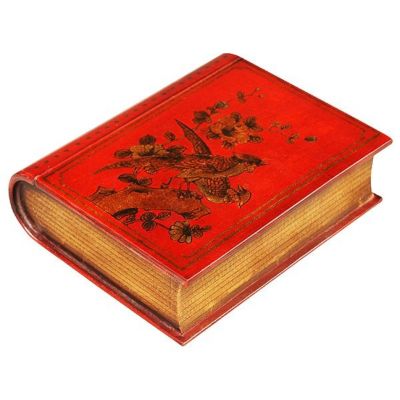
Tamara had brought along some jewels from Russia but her husband had stolen them to start his new life, so Tamara only had her valuable hand-painted books left. Tamara loved books and instilled a love for literature in me, and I was an apt pupil because I already loved reading.
Within a month, I was speaking Russian well, and she introduced me to the Cyrillic alphabet so I could also read books written in Russian. Tamara had brought wonderful books from Russia, both fairy tales and poetry, and I devoured them all in time. They had hand-painted pictures, and I always had to wash my hands before Tamara would let me read one of them.
Our household was quite large. Aside from my mother and father, myself and my baby sister, my maternal grandmother lived with us, as did a cousin of my mother’s. Then there was the staff my mother had hired, but they were seen in the kitchen area. When I was trying to learn to read, I used to bother every adult asking them what this letter was or that one, until I knew them all and was able to put them together.
Of course, these were the days before television, and I could not always find somebody who had time to read to me, so I wanted to be able to read on my own. My family had a cat and a dog, who got along well. When my father played the violin, accompanied by my mother on the piano, the dog became a music critic, and barked if he didn’t like a certain piece. I thought my father sounded like Jascha Heifetz, but of course I was not a music critic at that time.
I always looked forward to Tamara’s coming, and life was good in those days. Tjotja Tamara, as I called her because Tjotja means aunt in Russian, was strict, but she could also bend on occasion. I remember a time when I was supposed to have a painting lesson, but Tamara had brought some books from her home which I was anxious to read. I asked Tjotja Tamara if she could please make the drawings for me while I read. She saw how excited I was, and on this occasion, she gave in.
The war that enveloped Europe also included Estonia. At first, the communists occupied it, only to be driven out by the Nazis. Hitler had declared Estonians to be an Aryan race. That was lucky for us, because Nazis were told to behave themselves in Estonia, and on the whole, they did. Of course, we suffered from rationing and other deprivations. Cars, radios, bicycles, and other such items were taken from us. Even typewriters had to go.
My father pleaded the case of his typewriter in a Nazi court in Estonia. He said he needed it for his work, and to his surprise, he won his case. From the Nazis, who were kind to me, and seem to like little children because they missed their own families, I learned a little German. That is where my love for German began, and also my love for German music and literature, which I have until this day.
After a short while, Tjotja Tamara moved in with our family. She became part of the family and a great friend of my mother’s. The whole family spoke Russian, and often we would mix up our languages in the same sentence. I still wonder how anybody could understand me because by now, I was mixing three languages in my speech.
The Nazis discovered my father had been helping Jews and others escape from our summer place by the sea, and my father was put into a Nazi jail. There he remained for six months, and I used to write letters to him which he kept until his death. Among them were poems which he liked and encouraged me to write. My mother was very concerned and cried all the time.
My mother went to see the commandant of the jail. It was said the commandant was available to everybody, but that was not true. His mail secretary screened everybody who came to see the commandant. My mother waited on the courthouse steps to catch him, and she was successful after three days. The commandant, Herr Bergman, came out of the door, and my mother ran after him. She spoke fluent German, and addressed him in German.
He told her to come and see him in his office the next day, and my mother explained she had been trying without success. However, the commandant kept his word, and on the following day my mother was allowed in to see him. It must have taken a great deal of courage on my mother’s part, but she was afraid for my father because people were shot daily in the jail’s courtyard in order to make room for new prisoners.
When my mother was pleading with the commandant, it came out she had studied at the Berlin conservatory, and the commandant had a long discussion about his favorite music with her. He did tell my mother Hitler was sending new troops, but he knew well this was not going to take place. As a result of this encounter, Herr Bergman let my father go, and he arrived home that evening.
He was gaunt and skeletal, because he had only had bread and water in jail. Also, he had grown a mustache in jail, which my mother made him shave off. He had shared his cell with another man, and there was nothing to read except the German dictionary. As a result, my father learned some German, although his ear for languages was never as good as that of my mother’s. Still, he could now speak and understand German. He also played chess in jail. The chess pieces were made out of bread which had been soaked in water.
Because of bombing and other dangerous events in Tallinn, my family decided to take the children, my grandmother, and Tjotja Tamara to our summer place by the sea. The name of the place was “Öismae”. In translation, “Öismae” means “Hill of Flowers”, and it was a lovely place with a large house which my father himself had designed. My father was a lawyer, writer and politician, but architecture was among his many hobbies.
Tjotja Tamara moved to Öismae together with us. She and my grandmother looked after us and other children as did some of their mothers, who were friends of my parents. My mother was forced to work as a translator both for the Nazis and the communists. She had no choice in the matter, but I remember her saying perhaps it was not so bad because she got extra rations due to her job.
Luxury items such as butter, cream, sugar, and so on, were kept for the Nazis and were inaccessible to the general population. As a result, many stomach disorders healed themselves, and the children had good teeth. Both Tjotja Tamara and my mother continued my lessons at the summer place.
There were times I objected and wondered why I couldn’t play the way the other children did and had to be kept indoors for my lessons. But my mother and Tjotja Tamara persisted. Tamara was Russian orthodox, and often made me kiss the gold cross she wore around her neck. It seems my parents did not object, although they were not religious themselves, and I was not brought up with any religion.
Of course, there were play times also. One of the favorite sports of Europeans is mushroom hunting. We used to go to our forest and search for mushrooms to bring home. My mother’s staff was now reduced, but my grandmother was in charge of the kitchen, and she made wonderful sauces with the mushrooms we found.
My father, who had many large flower gardens, turned them into vegetable gardens because of war time rationing. Meat was smuggled in by farmers, who risked their lives doing it. My mother paid them with French table cloths from which they could make shirts. Never did I feel deprived during the war years. I had security, I had love, I had my lessons, and I had my books. Most of Tjotja Tamara’s books where taken to the summer place, which was only an hour’s walk from Tallinn.
Since our car had been taken, my father was able to keep his bicycle for a time, and often bicycled into town. However, the children were taken to the summer place in a horse-drawn carriage. In the absence of my parents, my grandmother and Tjotja Tamara were in charge of the household and of the children.
Tjotja Tamara and I often went searching for mushrooms together, and we knew where the best ones grew. I had been taught by my parents which ones were the poisonous mushrooms. A real prize was a purple-capped mushroom which was white underneath. We waited until it grew large before picking it, and every day there were wonderful sauces.
There was also a lot of bounty from the sea because in a back apartment of the house there lived a fisherman with his wife and daughter. We often ate fish he caught, together with mushroom sauce and vegetables. As far as I could tell, there was no shortage of food in our house, but my mother sometimes complained she did not have enough sugar to make a cake.
My favorite times were when I could sit down somewhere and immerse myself in a book. My mother translated “The Secret Garden” for me, which she had in French. She later told me it was one of my favorites stories which I liked to hear over and over again. Tjotja Tamara liked to tell me stories, and I was an avid listener. She told me about Czar Peter the Great, who had once referred to Estonia as the window to the Baltic. I saw a lithograph of Czar Peter and he was very handsome. I thought he was a romantic figure.
Tjotja Tamara had a nice singing voice, and she also taught me quite a few Russian songs, many of them folk songs. I used to sing songs like Kalinka, Ochichornia , and my favorite was Stenka Rasin. Stenka Rasin was kind of a Russian Robin Hood and the song is about him, love for mother Russia, and the beauty of Russia and her prairies. I was a storyteller also, and every night when we went to bed I used to tell my younger sister stories I made up, fantasies which we lived out sometimes during the day. There were always many people at the summer place. My parents liked to entertain, and people liked to come on a regular basis. Even during wartime, my parents gave parties and I remember quite a few of them. There was always music, and sometimes people even danced.
A friend of my mother and her husband, who was a law partner of my father’s, asked my mother if Tjotja Tamara could also teach their daughter, who was about the same age that I was. Tjotja Tamara did her best, but she came to my mother and told her the child was unable to learn and also unwilling. She did not want to continue teaching the girl, and my mother had to talk to her friend. The experiment was abandoned. But Tjotja Tamara and I shared a special relationship. We loved many of the same things, and I was a good pupil. I was always truthful, and I loved Tjotja Tamara as she loved me. There were few altercations. The one thing that could upset me was being accused of something unjustly, and something like that happened once. I can not remember what it was about now, but I felt Tjotja Tamara had been unfair to me. She was upset also, and made the foolish ultimatum of saying that she would not talk to me until I apologized. Since I felt I was in the right, I saw no reason for apologizing, and no apology was ever made. It was obvious things could not go on like that for ever, so after a few days Tjotja Tamara had to start talking to me again. The incident was soon forgotten. My love for Tjotja Tamara never faltered nor did my trust in her. As I see it now, I believe Tjotja Tamara was happy when she lived with us, even though she did not have a husband to love. She was a young woman, in her early 30’s, I believe, and perhaps she had dreams of romance. She never told me about that.
When the communists occupied Estonia for the second time in 1944, they were there to stay. Life became dangerous, and there were always reports of people being sent to Siberia or just vanishing. My father was a prominent man, and my parents realized the time had come to leave. Sweden was a neutral country, and accepted all refugees with warmth and sympathy, so my parents decided to go to Sweden. I was never told much about what was going on. Perhaps my parents wanted to protect me from the evils around me, but I think the main reason was they were afraid I would talk.
Being friendly and able to speak Russian, I might say something that could put the family or a family friend in danger. So I was kept in ignorance both by my parents and Tjotja Tamara.
Tjotja Tamara instilled in me a permanent love for all things Russian, music, literature, art, and above all the language itself. But she never talked to me about the war. When I asked questions, and I did, the adults became evasive.
In the summer of 1943, a boat appeared on our private beach. It was a beautiful beach, and on a clear day you could see the coastline of Finland. That summer, my father, together with a couple of friends, were on the boat, painting it and getting it into shape for the voyage to Sweden. I knew nothing about this, and had no idea I would be leaving my native land very soon.
Tjotja Tamara decided not to come with us, but went to settle somewhere in an area of Germany that in time was included in Western Germany. Her decision was based on the fact she had relatives and friends in Germany, and she was going to live with a friend for a while until she was settled. The goodbyes were heart-breaking.
Tjotja Tamara could not stop crying. Neither could my mother or I. After she had gone, I was depressed for a long, long time, missing her. Tamara had been so much a part of my life that my life seemed empty all of a sudden. But I was a child, and like most children I got over it in time. Never all together, but to a point where I could be happy again and go on with my life.
On a chilly November night, my family had to escape from Estonia. The communists had driven out the Nazis, and had occupied Estonia for the second time. My father was too prominent a man to be overlooked by the communists, and the adults knew his life was now in danger.
My father was a great patriot, but he knew he had to do what was best for all. Best for his own family and for his friends and their families. My father and his friends had fixed up the old boat they had procured and made it seaworthy. It wasn’t much of a boat, but it had a captain’s cabin, and my father also found a real sea captain to take us across the sea. All material possessions had to be left behind because lives of people were more important.
The boat was not large and there were about twelve of us who were going to go in that little boat. I was told we were going for a holiday and would soon return. I didn’t want to leave because I was happy in my home and grandmother said she was too old to come along.
We chose a forest road to go, without making any noise, to the beach. My grandmother was holding my hand and on the beach she hugged me very tight as she had often done before. A small boat took me and the other children to the big boat, where my father was waiting to help us up.
Everything was arranged for the journey. Seats had been built in the boat and there was plenty of blankets and food my grandmother had prepared. My mother remarked it was a starry night, which in our case was not good because communists search lights skimmed the water and German planes were overhead.
Also, German ships were waiting to pick up refugees such as our family to take them to the Third Reich. My parents knew many people had drowned on the way to Sweden in just such boats, but this time, there seemed to be no choice. If the communists had found my father, they would have shot him on sight, and the rest of my family would have been taken to Siberia to a labor camp.
My father started singing the Estonian anthem when the boat began to move. We sang the anthem softly until the coast was out of sight and we could no longer see my grandmother.
Despite a serious leak in the boat, we made it to Sweden where we were safe. It wasn’t a pleasant journey because of the gas fumes which made everybody vomit over the edge of the boat into the water. Also, we had to sleep sitting up because there was no room to lay down.
Sweden accepted all refugees who arrived in this way, and made us feel like honored guests. Camps had been arranged for us where we could stay for a short time, and the Swedes donated clothing, food and other necessary items. All refugees were seen by doctors, but my family was in good health. Since this story is about Tamara, I will not say much about our seven years in Sweden. It is enough to say my practical mother, who did not believe with certainty we would return home started learning Swedish right away. My father also learned enough Swedish, and after about eight months, he was able to get a job as an accountant in a bank. Word had gotten around my mother spoke eleven languages, and a wealthy woman, Mrs. Ingrid Wiberg, asked her to work for her in a charitable organization which she had established for refugees.
Mrs. Wiberg was a prominent and wealthy woman in her own right, and her husband had started the first canning industry in Sweden and the couple was very rich. After a few weeks, Mrs. Wiberg came to visit us in our small apartment. She told my mother the school my sister and I attended was not a good one, and we were not speaking in upper-class Swedish but in an awful slang. My mother, who was a bit of a snob, could not endure to hear this. She accepted Mrs. Wiberg’s offer to move into an apartment in the large Wiberg house.
My sister and I were both put into private girl’s schools where the standards were high. Young girls all over the country were taking exams, wanting to go to the school which I was now to attend. I fell into second place when tested because I was a little weak in Math, and there was a girl who was better than I in that subject. Now a new life began. We lived in the beautiful Wieberg house, where we had a real park for our garden and my balcony looked over the park. Aesthetic life was mine to share once again, but my parents now had to work for a living. After there was no longer a need for the charitable institution Mrs. Wiberg had opened, my mother got a job as a stenographer and translator in the Swedish Supreme Court, which was located in Gotenberg where we had settled.
Thanks to my strong and responsible parents, life was still good for me. My mother had been taking stenography at night, and became quite good at it. My father came home to read the newspapers every day, hoping the war would soon end and we could return home. But this was not going to happen, since president Roosevelt gave Estonia to Stalin. Estonia now became part of the USSR.
After seven years in Sweden, my parents decided the time had come to leave, and they decided to settle in Canada, where there were more opportunities.
The day we left Sweden, many friends came to see me off at the harbor. My parents were traveling with some friends who had a 19 year old son. They decided to visit England before going to Canada and we spent several weeks in England visiting museums. Buckingham Palace and Madame Tussaud’s stand out in my memory. My father also insisted on visiting the free Estonia Consulate in London, where he walked up and down on the sidewalk, “This is Estonian Land,” he declared.
We had relatives in Toronto, Ontario, and they met us at the train when we arrived. Again, my parents had to look for work while my sister and I attended high school. And again, I had to learn another language.
The first year was difficult because I couldn’t understand what the teachers were saying, but my first essay was read in class just as my essays had always been read out in Sweden. I was a natural writer, and almost never did I make a mistake. This was not always an advantage, because both in Sweden and in Canada, I became known as “teacher’s pet,” and was ostracized by the other students. But all this changed, too. I soon had a best friend and my social life became quite active. So active, in fact, that my grades slipped to the dismay of my parents. I had discovered boys, and had many dates. My dates were restricted to weekends, except for special occasions, and of course, I had a curfew.
My mother saw to it I was always well dressed, and my friend had a mother who could sew, so she was always well turned out. Her father was a gynecologist, so of course she became the expert on all matters involving boys and how children were born.
In Sweden, my mother had corresponded with Tjotja Tamara. Tamara had found happiness. In Germany, she met the man whom she had first loved. He was now a widower and a judge, and he and Tamara got married. Those were wonderful years for my dear Tamara, and I couldn’t have been happier for her.
The letters came and went back and forth. Only one letter came from my grandmother. The censors had confiscated all others, it seemed. In this letter, she wrote about our friends who were still in Estonia, and she used codes for their names. To use real names would be putting our friends in danger. The correspondence continued once we were settled in our own small house in Toronto, Ontario, Canada.
Tamara was now living a good life with the man she had always loved. She used to send me presents, such as hand-made handkerchiefs and books. I wrote to her also, in Russian. For many years, Tamara seemed happy, but then her husband died, and she was alone again. In time she married a family friend, also a widowed judge. She outlived him, too, and our correspondence continued until her death.
This then is the story of my beloved governess, Tamara. I still have a picture of her, wearing a simple but elegant suit. Sometimes I look at it, and remember. Now that I was so much older, I realize how beautiful Tamara had been. More significant for me, Tjotja Tamara had a great influence on the rest of my life.
I still sung Russian songs and read Russian books. The Russian language will always sound beautiful to my ears. Tamara had left an enduring legacy to my family. When I had a daughter, my mother and I taught her to speak Russian, and we also taught her Russian songs.
Since we now lived in Canada, where French was desirable, we still chose to teach my daughter Russian before she started learning French in school. My daughter is now passing on Russian to her own child, and there seems to be no end to what Tamara started.
To my family and to me, she remains one of the greatest people we have ever known.
© Amy Thompson 2009


No comments:
Post a Comment